
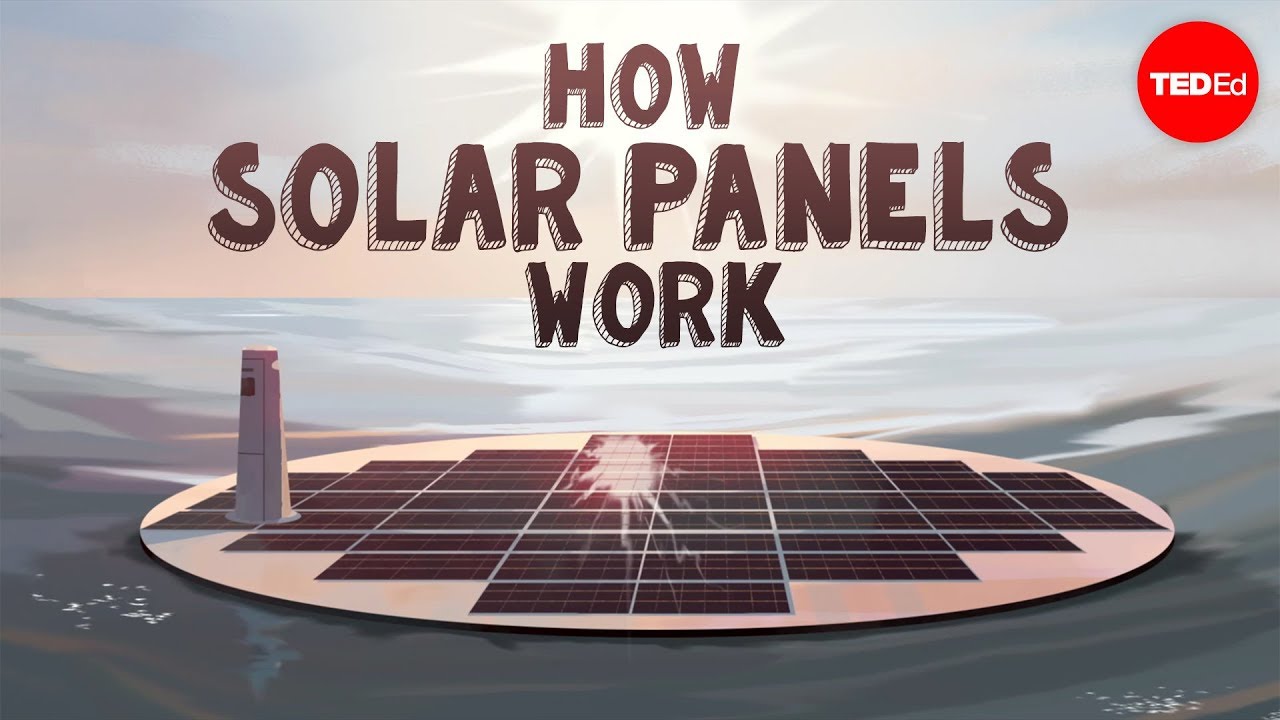
The sun is the ultimate or the greatest source of energy. All living beings directly or indirectly depend on sun to survive because everybody need energy to live.
Contents
Solar panels
A solar panel is a device that converts solar energy into electrical energy. The term ‘solar panel’ is used colloquially for a photo-voltaic (PV) module. The photo-voltaic cells installed in the system uses sunlight as a source of energy and produce direct current electricity. It is made up of smaller units called solar cells. The most commonly available solar cell is made up of a semi-conductor silicon.
Crystalline silicon is sandwiched between the two conductive layers in a solar cell. Since each silicon atom is bonded to its neighboring atoms with strong bonds, there is no flow of current in it.
Different layers of silicon
The two different layers of silicon are n-type and p-type silicon. The n-type silicon has extra electrons where as the p-type has extra holes. When the electrons move in the P/N junction, a positive charge and a negative charge is formed.
When a photon strike the silicon cell with suitable energy, it leaves a hole and as a result the electrons becomes free to move around. The movement of these electrons initiate the working of the solar cells.
Solar cells are long lasting because the moving electrons comes back to its original position and so there is no loss of energy.
Challenges
There are physical as well as logistical challenges. The uneven distribution of solar energy is a main factor. In cloudy days or at nights, the availability of solar energy is less than required. So smart and efficient way of using and storing the electricity is required. The most efficient solar cell could convert only 46% of the available sunlight to electricity.
Benefits
In spite of all the limitations, solar technology could provide energy to the entire world with a large space and right infrastructure. Sahara deserts could be used for large installations. Numerous innovations made in this area are making it cheaper and efficient to use.
How do solar panels work?

Solar panels work by converting sunlight into electricity. They contain photovoltaic (PV) cells that absorb sunlight and generate an electric current when exposed to light. This process is known as the photovoltaic effect.
MCQs
1. What is the main component in a solar panel that helps convert sunlight into electricity?
A) Copper wires
B) Silicon cells
C) Plastic sheets
D) Aluminum frames
2. What happens when sunlight hits a solar panel?
A) It reflects back into the sky
B) It heats up the panel
C) It creates an electric current
D) It changes color
3. Can solar panels work on cloudy days?
A) Yes, but less efficiently
B) No, they need direct sunlight
C) Yes, just as efficiently as on sunny days
D) No, they turn off automatically
4. What is the role of an inverter in a solar power system?
A) To store excess electricity
B) To convert sunlight into electricity
C) To convert the electricity from DC to AC
D) To clean the solar panels
Read More